
Case102
●1985
Age at presentation: 16 years and 4 months, female / Transfer case (from the United States)
Documents provided: Initial dental model, cephalometric X-rays, panoramic X-rays,
facial photographs, intraoral photographs, transfer documents
Duration of active treatment after admission: 10 months
Surgery
●Treatment by the Previous Dentist
Age at start of treatment: 14 years and 3 months
Duration of active treatment: 2 years
 teeth extracted
Age at presentation: 16 years and 4 months, female / Transfer case (from the United States)
Documents provided: Initial dental model, cephalometric X-rays, panoramic X-rays,
facial photographs, intraoral photographs, transfer documents
Duration of active treatment after admission: 10 months
Surgery
●Treatment by the Previous Dentist
Age at start of treatment: 14 years and 3 months
Duration of active treatment: 2 years
teeth extracted
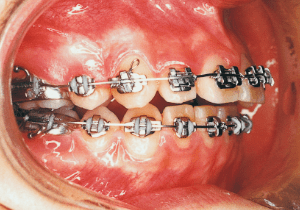
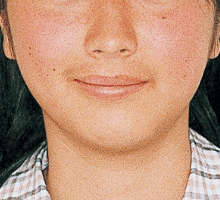
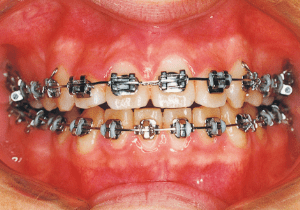
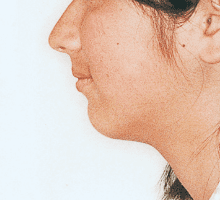
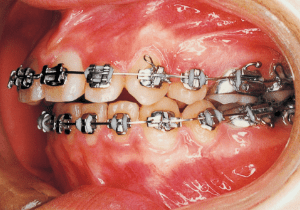
1 Initial Visit 3-27-’85
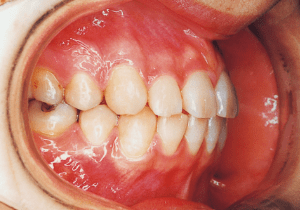
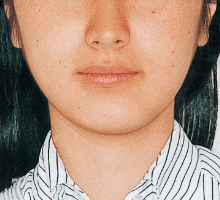
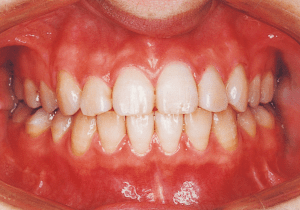
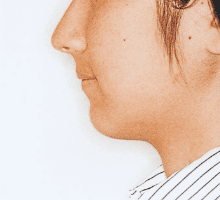
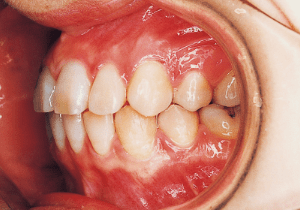
2 After treatment 12-8-’86
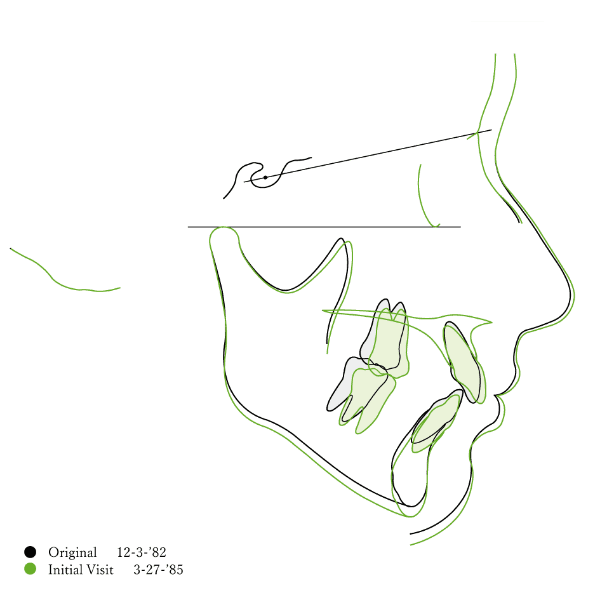
A case of a patient who transferred to our practice during treatment involving the extraction of the left and right maxillary first premolars and the left and right mandibular second premolars. The Class II relationship of the molars has not been corrected. The planned treatment period has been exhausted, and since no further growth of the mandible is expected, there is no treatment plan that involves braces alone. Cases in which treatment, including surgical intervention, was necessary.
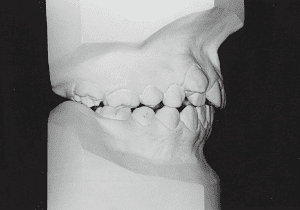
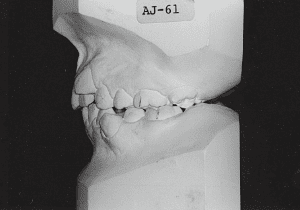
3 12-3-’82 Original
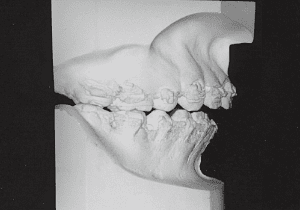
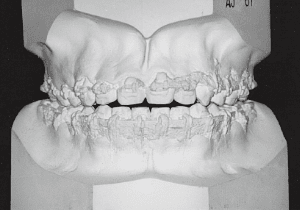
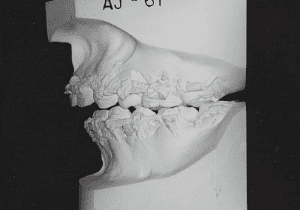
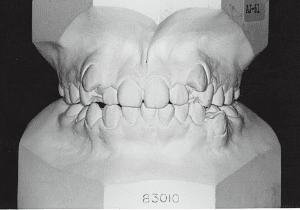
4 3-27-’85 Initial Visit
Diagnosis and Treatment Plan by the Previous Orthodontist:
A Class II mandibular retrusion case with a high-angle mandibular plane. Extraction of the left and right maxillary first premolars and the left and right mandibular second premolars was selected. Edgewise Technique (Straight Arch). Planned treatment duration: 2 years. A note has been added stating that the patient began using the Hi-Pull headgear just before being transferred and underwent swallowing exercises.
Age at Start of Treatment: 14 years and 3 months
5
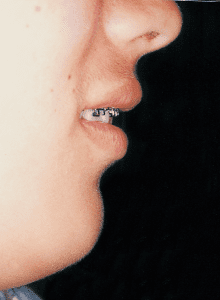
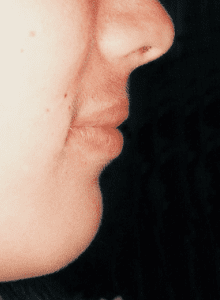
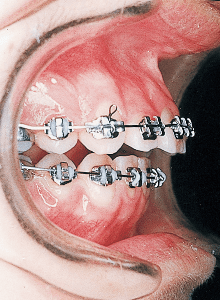
6 3-27-’85 Initial Visit
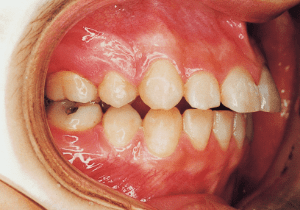
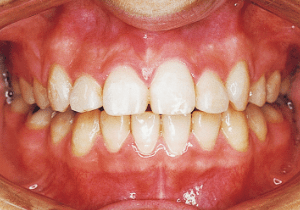
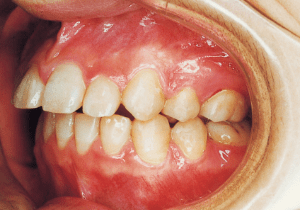
7 7-29-’85 At the treatment plan changes and the appliance was removed
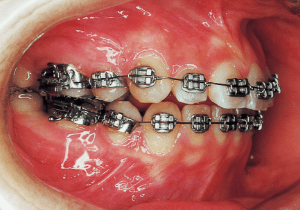
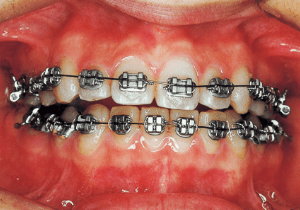
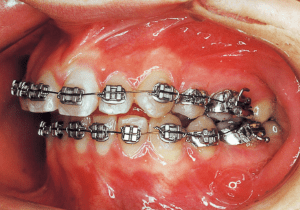
8 2-4-’86 at appliance replacement
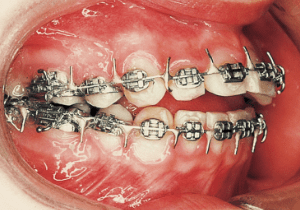
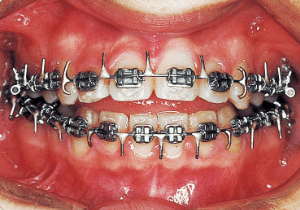
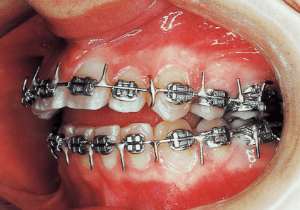
9 7-12-’86 Before Surgery
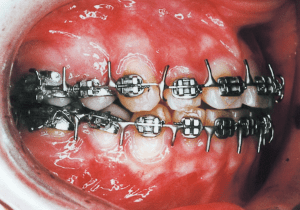
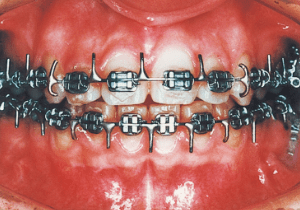
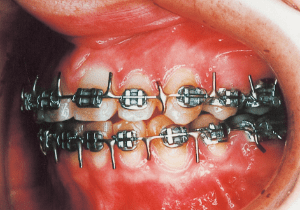
10 8-25-’86 After Surgery
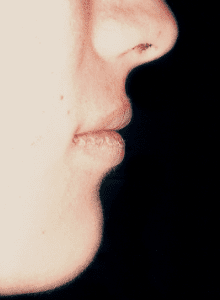
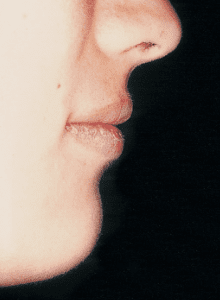
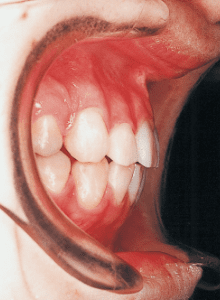
11 12-8-’86 After treatment
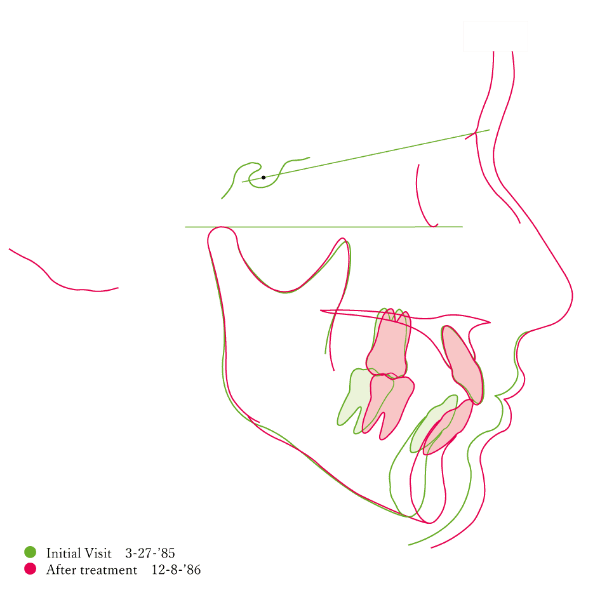
12
Condition upon transfer to my office: At the time of the initial visit, the patient was 16 years and 4 months old. Although the arch form is good, the extraction spaces have closed, resulting in a Class II molar relationship. Consequently, the patient has a significant overjet and an open bite. The midline of the lower jaw is shifted to the left. As a result, the facial appearance is asymmetrical.
Although two years have already passed since the start of treatment, the patient has been extremely cooperative. The third molar is present on all sides except the right side of the maxilla.
Problems: The molar relationship remained Class II. Since further growth and development are no longer expected, no treatment options for the overjet and open bite can be devised. The treatment has already lasted two years, and the treatment costs have been paid in full.
Diagnosis and Treatment: Since growth is already nearly complete, forward growth of the lower jaw cannot be utilized for treatment. Although the maxillary molars have experienced anchorage loss, due to the marked Class II malocclusion, it was determined that achieving a Class I relationship through distal movement of the maxillary molars from this condition was not feasible. Furthermore, while distal movement of the first molar due to the extraction of the second molar is a possibility, since the maxillary third molar is present only on the left side, I cannot bring myself to reduce the right side of the maxilla to a single molar; therefore, I have no choice but to consider this a surgical case. Since she was a bit too young for surgery, the device previously fitted by her previous doctor was removed, and it was decided that she would have the device refitted before undergoing surgery.
Treatment Progress and Results: Approximately one year later, the appliance was reapplied; following five months of active treatment, the patient underwent surgery and received four months of postoperative orthodontic treatment after being discharged from the hospital.
Comment: Given the original condition of this case, my treatment plan would have been to extract the left and right maxillary first premolars, the left and right mandibular second premolars, and the left maxillary second molar, and to proceed with treatment without considering surgical intervention. Extraction of the left second maxillary molar may also be effective in treating a midline deviation. The third molar will serve as a substitute for the second molar. Extracting only the four premolars would improve the Class I malocclusion on the right side, but it would likely be impossible to correct the malocclusion on the left side to Class I.